
FUNDAMENTACIÓN DISCIPLINAR
¿Por qué estudiar el Doctorado en Ciencias Computacionales?
El Doctorado en Ciencias Computacionales permite aportar soluciones a diversos problemas del entorno mediante la investigación y aplicación innovadora del conocimiento en minería de datos, procesamiento digital de imágenes y señales, cómputo inteligente, computación educativa, ciencia de los datos, aprendizaje de máquina, entre otras áreas de la ciencias computacionales.
El egresado cuenta con los principios disciplinares y metodológicos que le permiten realizar la generación y aplicación innovadora del conocimiento de modo independiente.
Generar conocimiento de frontera en el campo de las ciencias computacionales y aplicarlo de modo innovador a la solución de problemas del entorno.
Ser reconocido como uno de los mejores programas de investigación en ciencias computacionales a nivel nacional e internacional.
Objetivo General
Formar investigadores que sean capaces de generar conocimiento de frontera y aplicarlo de forma innovadora en la solución de problemas del entorno, mediante la impartición de cursos, organización de seminarios de investigación, realización de tesis, elaboración de artículos y transferencia de conocimientos los sectores productivos y sociales.
Formar investigadores que sean capaces de generar conocimiento de frontera y aplicarlo de forma innovadora en la solución de problemas del entorno, mediante la impartición de cursos, organización de seminarios de investigación, realización de tesis, elaboración de artículos y transferencia de conocimientos los sectores productivos y sociales.
- Formar investigadores independientes en el área de las ciencias computacionales
- Impartir cursos de alta calidad
- Organizar eventos para la libre discusión académica de ideas y proyectos
- Elaborar tesis siguiendo altos estándares de calidad
- Publicar artículos científicos en revistas internacionales de alto impacto
- Transferir conocimientos innovadores a los sectores productivos y sociales.
- Computación Inteligente: Engloba el estudio de la inteligencia artificial, inteligencia computacional, aprendizaje máquina, reconocimiento de patrones, minería de datos, así como el campo de la ciencia de los datos.
- Computación educativa: Estudia el uso y desarrollo de tecnologías y métodos de la computación aplicados en la docencia en entornos modernos de aprendizaje.
- Procesamiento de imágenes y señales: Se refiere al desarrollo y aplicación de métodos matemáticos y computacionales para caracterizar señales eléctricas e imágenes digitales, aplicados en ramas tales como la medicina, telecomunicaciones, audio, video, entre otras.

Duración
4 AÑOS
¿Tienes más dudas? Contáctanos
Nos gustaría darte más información, deja tus datos
Núcleo Académico Básico
Contamos con 10 profesores investigadores con grado académico de doctor.
- Jorge Enrique Lorenzo Rivasa, Heydy Castillejos Fernandez. Análisis y desarrollo de una solución orientada a las redes celulares con énfasis en la seguridad automovilística y el Internet del Todo. Publicacion Semestral Padi Vol. 7 No.14, pp. 23–29, 2020.
- López-Ortega, Omar; Pérez-Cortés, Obed, Castillejos-Fernández. Heydy; Castro-Espinoza, Félix; González-Mendoza, Miguel. Written documents analyzed as nature-inspired processes: persistence, anti-persistence and random walks. APPLIED SCIENCES. 2020.
- Àngela Nebot, Francisco Mugica and Félix Castro; An e-Learning toolbox based on rule-based fuzzy approaches. APPLIED SCIENCES. 2020.
- O. Alonso-Hernández, Julio C. Ramos-Fernández, M. A. Márquez-Vera, Virgilio López-Morales, J. A. Ruiz-Vanoye, Joel Suárez-Cansino, Francisco R.Trejo-Macotela. Fuzzy infrarred sensor for liquid level measurement: A multi-model approach.
- Márquez-Vera, Marco Antonio; López-Ortega, Omar; Ramos-Velasco, Luis Enrique. Diagnóstico de fallas mediante una LTSM y una red elástica. Revista Iberoamericana de Automática e informática industrial. 2021.
- García-Islas, L.H., Franco-Arcega, A., Quiroz-Gutierrez, J.A y Franco-Sánchez, K.D. Minería de patrones frecuentes para la comprobación de las reglas de Susumu Ohno y su uso en la identificacioń de evolución de organismos. Pädi Boletín Científico de Ciencias Básicas e Ingenierías del ICBI, Vol 7, No. 13, pp. 84-89, 2019.
- Herrera-Alcántara, O., Barrera-Animas, A.Y., González-Mendoza, M., Castro-Espinoza, F. Monitoring student activities with smartwatches: On the academic performance enhancement. Sensors (Switzerland) 19(7), 1605, 2019.
- Juan Carlos Gonzalez-Islas, Omar Arturo Dominguez-Ramirez, Omar Lopez- Ortega, Gildardo Godinez-Garrido, Heydy Castillejos-Fernández. A Proposal for Human Gait Analysis, 4th Pan-American Interdisciplinary Conference (PIC), 06-08 November, Mexico City, Mexico, Proceedings, pp 138, 2019.
- López-Ortega, O., Castro-Espinoza, F., Fuzzy similarity metrics and their application to consensus reaching in group decision making. Journal of Intelligent and Fuzzy Systems, 36 (4), pp. 3095-3104, 2019.
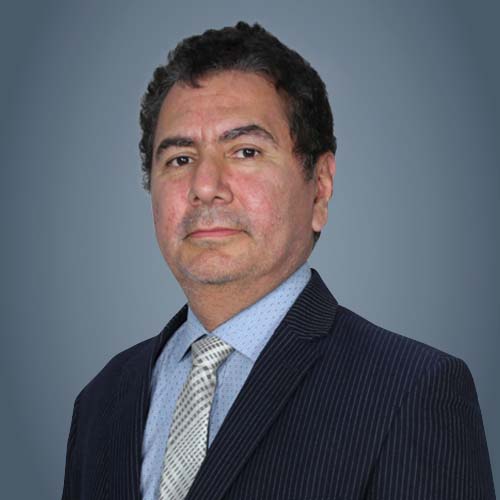
Dr. Heberto Gómez Pozos
gpozos@uaeh.edu.mx
SNII: II
PRODEP: Vigente
LGAC: Procesamiento de imágenes y señales
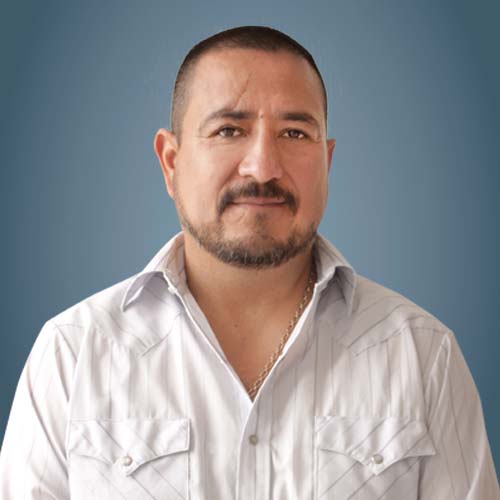
Dr. Félix Agustín Castro Espinoza
fcastro@uaeh.edu.mx
SNII: I
PRODEP: Vigente
LGAC: Computación inteligente
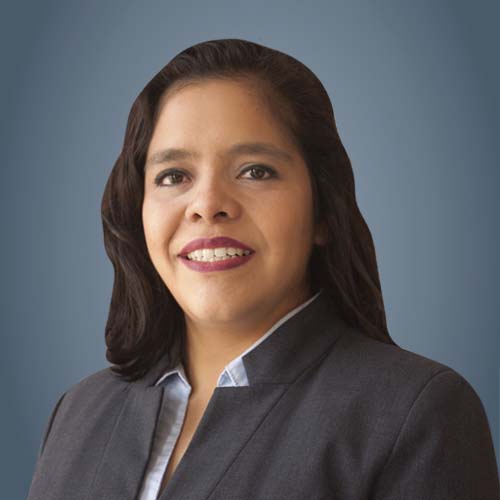
Dra. Anilú Franco Árcega
afranco@uaeh.edu.mx
PRODEP: Vigente
LGAC: Computación inteligente
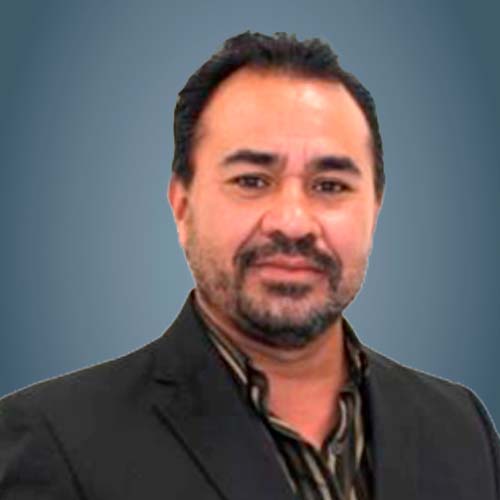
Dr. Omar Arturo Domínguez Ramírez
omar@uaeh.edu.mx
SNII: I
PRODEP: Vigente
LGAC: Procesamiento de imágenes y señales
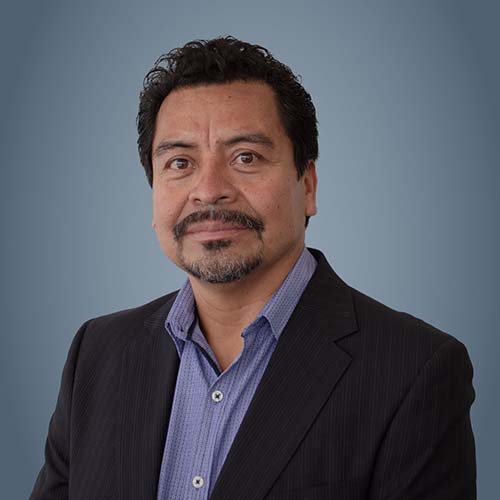
Dr. Virgilio López Morales
virgilio@uaeh.edu.mx
SNII: I
PRODEP: Vigente
LGAC: Computación inteligente
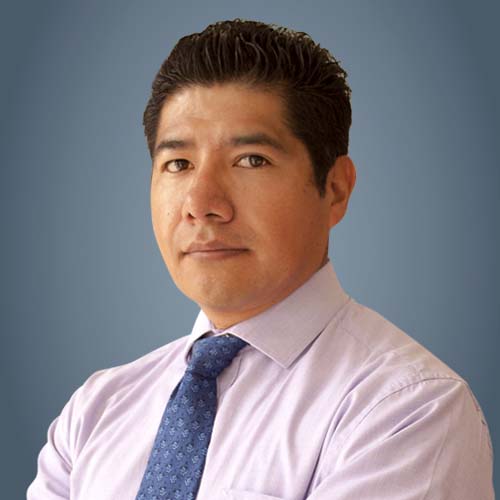
Dr. Obed Pérez Cortés
obed_peres@uaeh.edu.mx
SNII: I
PRODEP: Vigente
LGAC: Procesamiento de imágenes y señales
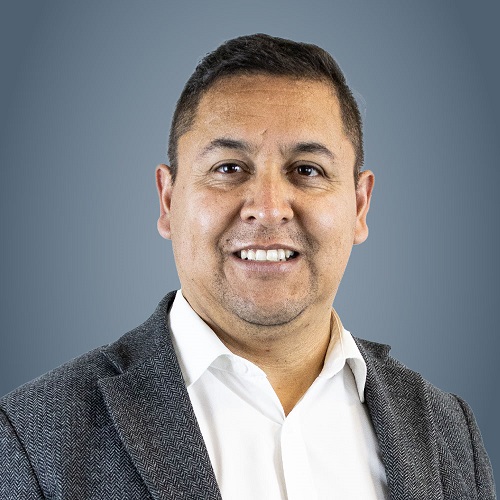
Dr. Juan Carlos González Islas
juan_gonzalez7024@uaeh.edu.mx
SNII: I
PRODEP: Vigente
LGAC: Computación inteligente para sistemas complejos / Desarrollo de ambientes virtuales
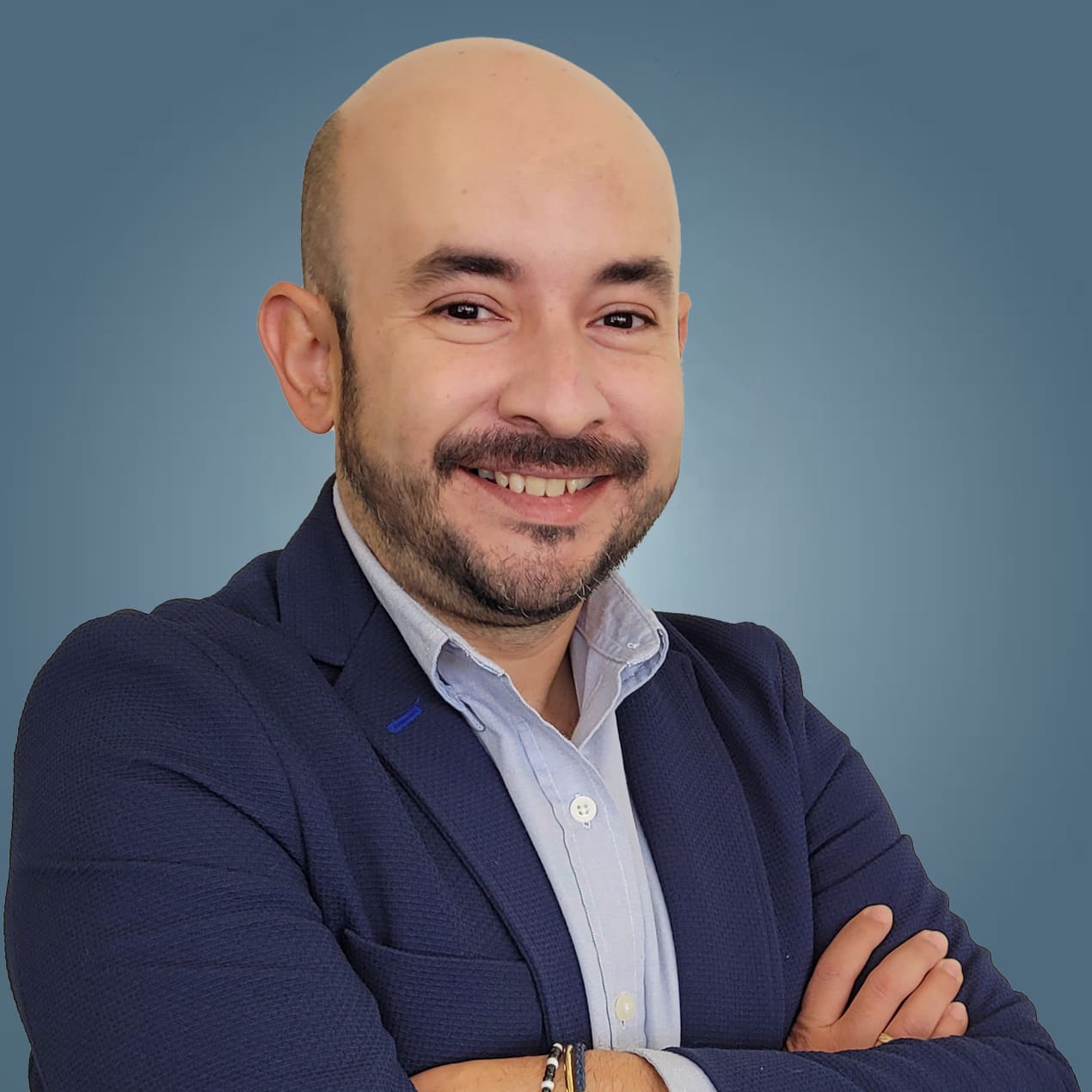
Dr. Aldo Márquez Grajaless
aldo_marquez@uaeh.edu.mx
SNII: I
LGAC: Computación inteligente para la solución de sistemas complejos

Dr. Manuel Alejandro Ojeda Misses
manuel_ojeda@uaeh.edu.mx
SNII: C
PRODEP: Vigente
LGAC: Inteligencia Computacional y Diseño de Sistemas Electrónicos